


Case studies conducted by Partnership for Observation of Global Ocean (POGO) members in different parts of the world demonstrate real examples of various socio-economic benefits of ocean observation.
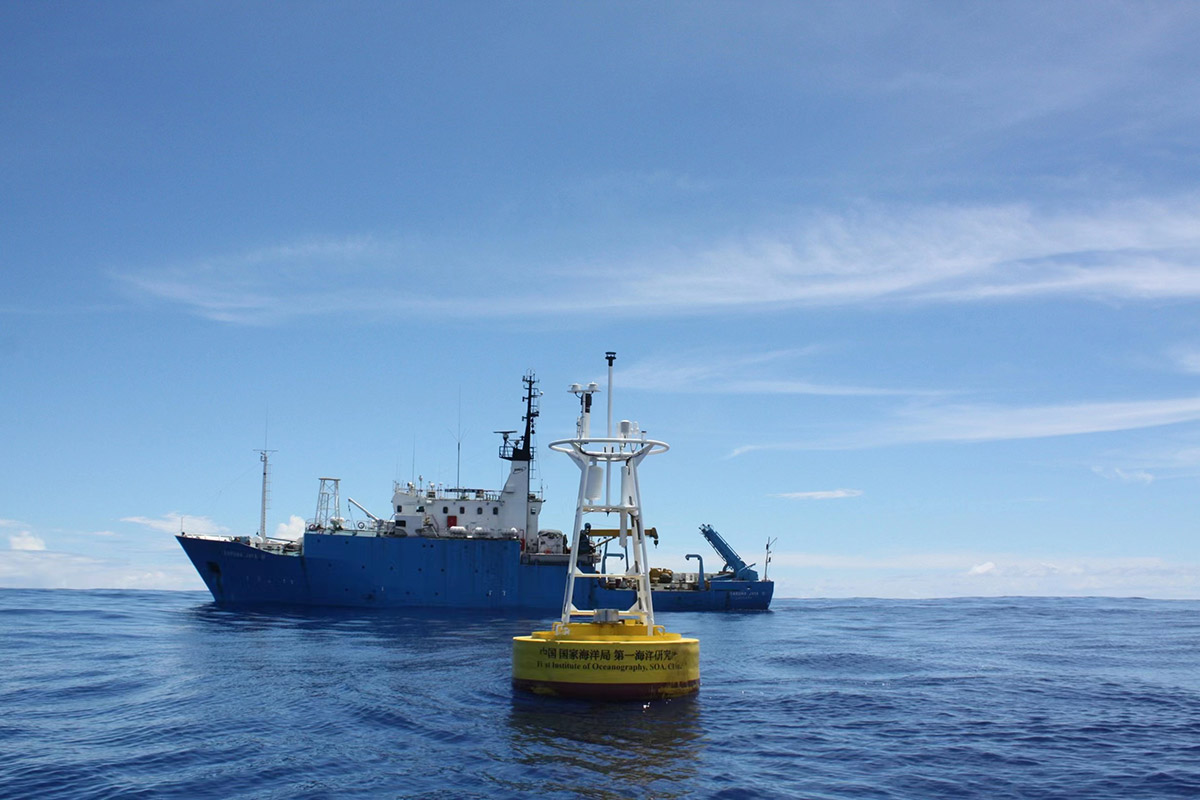
The fixed buoy system developed by researchers at the First Institute of Oceanography, Ministry of Natural Resources and their collaborators was published as one of the five case studies focused on the significant role of fixed ocean buoy systems in understanding the role of the Indian Ocean in the Asian monsoon.
In the traditional weather forecast method, forecasters bring together observations taken by satellites, planes, balloons, and weather stations. Yet there are far fewer measurements taken in the ocean, despite the massive role that the seas play in the Asian monsoon. The Bailong buoys, which are anchored to the seabed, can take in situ measurements in the ocean. It provides continuous, real-time data including surface wind speeds, surface air humidity, pressure, rainfall, sunshine duration and etc Thanks to the Bailong buoy, these data provide invaluable information for weather and climate predictions. Besides, it also helps researchers shine light on the relationship between the Asian monsoon and other weather phenomena.
Although we have made some progress on long-term time series measurements, we still have a long way to go to develop ocean science and increase our ocean observation capacities. Luckily, we have built a system to provide us with data, now we need to analyze it and better understand what is happening. This makes the fixed ocean buoys so important: it gives us a chance to really understand the mechanisms underlying how the Indian Ocean moderates the monsoon and put us in the best possible position to mitigate disasters or the negative effects from climate variability and climate change in the future.
For the original article, please see the link: Ocean Observations that are Helping Researchers Decode the Secrets of the Asian Monsoon

